
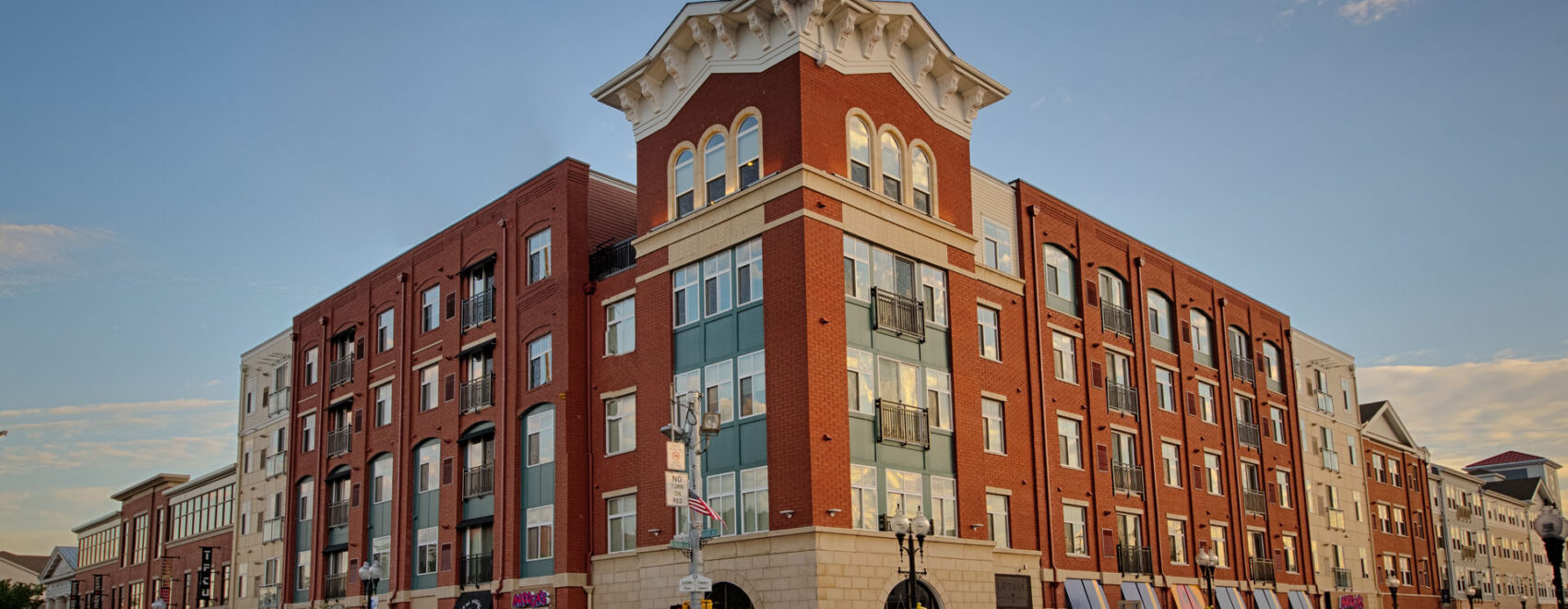
Commercial buildings often rely on layered wall assemblies that combine structural performance, moisture protection, insulation, and exterior durability within a single building envelope. One of the most common examples is a brick veneer façade installed over reinforced concrete masonry unit (CMU) backup walls.
These systems are widely used throughout commercial construction because they balance long-term durability, energy efficiency, fire resistance, and architectural appearance. They are commonly found in schools, hospitals, retail developments, municipal buildings, hospitality properties, and multi-family residential construction throughout New York City, Long Island, and the surrounding region.
Many modern commercial projects also combine masonry with precast concrete systems, curtain wall assemblies, and structural steel framing. Commercial façades frequently integrate multiple wall systems together to meet both structural and architectural requirements.
What Is a Brick Veneer Wall System?
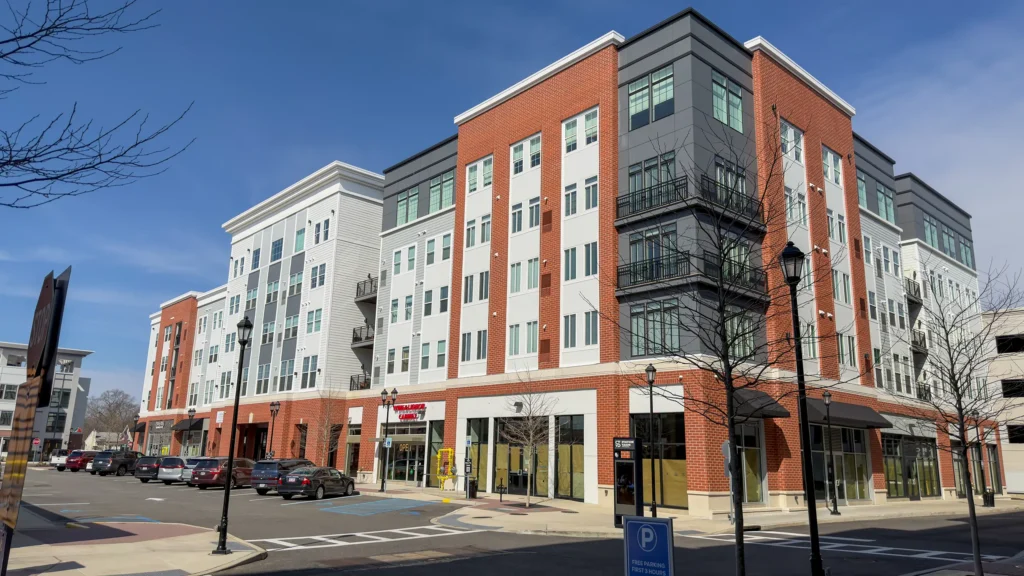
In commercial construction, brick veneer typically functions as the exterior facing material of the wall assembly rather than the building’s primary structural system.
The brick façade primarily provides:
- Architectural appearance
- Weather resistance
- Impact durability
- Long-term performance
- Low maintenance requirements
Behind the brick veneer, the wall assembly often includes:
- Reinforced CMU backup walls
- Air and vapor barriers
- Continuous insulation
- Drainage cavities
- Structural steel or reinforced concrete framing
Each layer within the assembly serves a different purpose, helping the wall system manage structural loads, moisture infiltration, thermal performance, and long-term building envelope durability.
How Reinforced CMU Backup Walls Work
Behind the exterior brick façade, reinforced CMU walls often serve as the structural backup system.
These reinforced masonry assemblies may provide:
- Structural support
- Lateral load resistance
- Fire-rated construction
- Acoustic separation
- Impact resistance
- Support for building envelope systems
Because reinforced CMU performs well in high-occupancy and institutional environments, these systems are heavily used in schools, hospitals, emergency response facilities, and public-sector construction.
CMU construction is common in schools, hospitals, and municipal buildings throughout the New York metro area. Healthcare facilities such as South Shore University Hospital often rely on reinforced masonry assemblies to support fire separation, durability, and long-term building performance. Similar reinforced wall systems are common in municipal projects such as Massapequa Fire House and education projects like PS 339.
Understanding Commercial Cavity Wall Construction
Most commercial brick veneer systems are constructed as cavity wall assemblies.
A cavity wall includes an intentional air space between the brick veneer and the backup wall system. This cavity helps manage moisture infiltration by allowing water that penetrates the brick façade to drain safely through flashing systems and weep vents before reaching the interior structure.
Commercial cavity wall systems commonly include:
- Air barriers
- Vapor barriers
- Continuous insulation
- Flashing systems
- Drainage planes
- Shelf angles
- Expansion joints
- Reinforced masonry backup walls
Proper detailing and coordination are critical because moisture-management failures can create long-term building envelope problems around windows, parapets, roof transitions, and façade penetrations.
Why Brick and Block Systems Remain Common in Commercial Construction
Brick veneer and reinforced block construction systems continue to be widely used because they provide a practical combination of durability, constructability, and long-term performance.
These systems support:
- Long service life
- Fire resistance
- Energy-efficient wall assemblies
- Resistance to weather exposure
- Reduced maintenance requirements
- Flexible architectural design options
- Compatibility with modern façade systems
Large mixed-use developments frequently combine masonry with storefront systems, curtain wall assemblies, precast concrete, and structural steel framing.
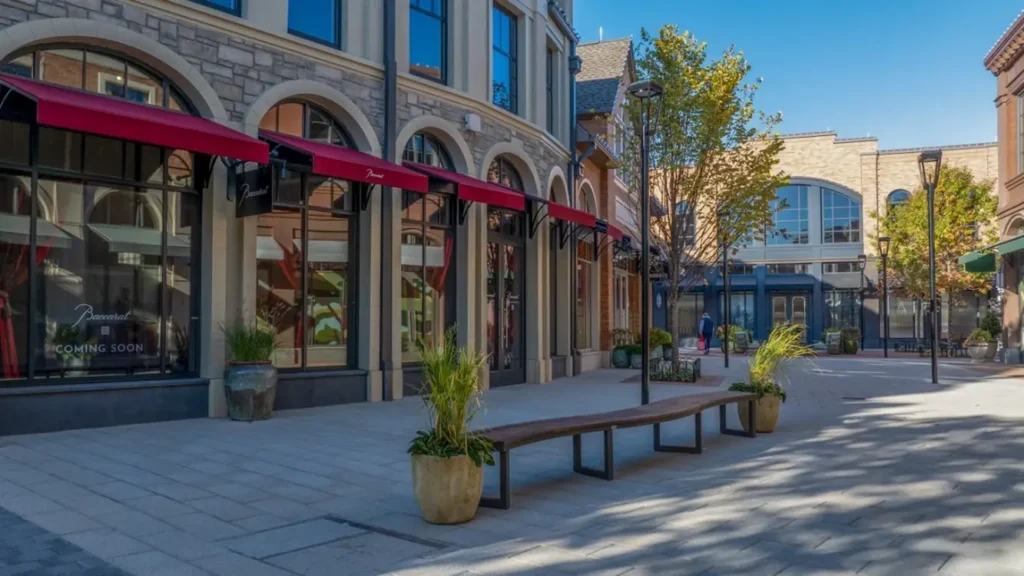
Projects such as Station Yards in Ronkonkoma, New York demonstrate how brick, CMU, retail storefronts, healthcare facilities, hospitality spaces, and residential construction can all integrate within a single large-scale development. Retail-focused projects such as Belmont Park Village in Elmont, New York also rely on durable masonry façade systems capable of supporting high-traffic public environments.
Coordination During Pre-Construction Is Critical
Commercial masonry wall systems require extensive coordination between architects, structural engineers, façade consultants, construction managers, and masonry contractors before installation begins. Pre-construction coordination often includes reviewing:
- Masonry wall assemblies
- Structural support conditions
- Moisture-management details
- Shelf angle placement
- Expansion joints
- Flashing transitions
- Curtain wall integration
- MEP penetrations
- Façade sequencing
- Scaffold access and material staging
Through our masonry constructability review & pre-construction services, Giaquinto Masonry helps project teams identify constructability concerns and coordination challenges before they affect active construction schedules.
Our commercial construction value engineering services can also help evaluate alternative masonry systems, façade materials, and installation approaches that support project budgets while maintaining long-term performance goals.
As commercial building envelopes continue evolving, our advanced masonry systems review helps teams evaluate emerging masonry technologies, insulated wall systems, and modern façade construction methods used throughout commercial construction.